
Planning a Ramanathaswamy Temple visit? I’ve navigated the maze of baths, queues, and logistics. Here’s your complete guide to this sacred Jyotirlinga.Let me hand you the compass I wish I had.
We’ll cover prasad hacks, photography spots, and budget stays. You’ll even learn the story behind the floating stone. Stick around; faith meets practical tips in the next scroll.
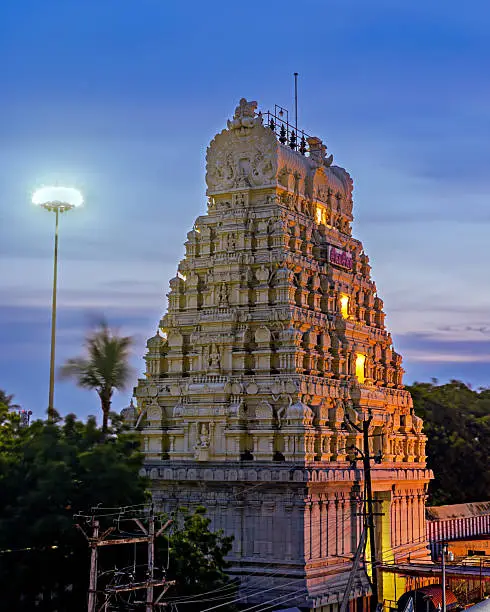
Ramanathaswamy Temple History and Significance – Why This Jyotirlinga is Sacred
Ramanathaswamy Temple stands as one of India’s most revered Jyotirlinga temples, carrying immense spiritual and historical significance. This magnificent temple connects devotees to ancient Hindu traditions and epic mythology, making it a must-visit destination for spiritual seekers.
Spiritual Significance of Ramanathaswamy Temple:
- One of the 12 sacred Jyotirlingas representing Lord Shiva’s divine light
- Part of the prestigious Char Dham pilgrimage circuit in India
- Mentioned in ancient texts like Skanda Purana and Ramayana
- Believed to wash away sins and grant moksha (liberation)
- Sacred site where Lord Rama worshipped Shiva after defeating Ravana
Ramanathaswamy Temple Historical Facts:
- Construction Period: 12th-17th century across multiple South Indian dynasties
- Architectural Style: Classic Dravidian temple architecture
- Royal Patronage: Supported by Pandya, Chola, and Vijayanagara kingdoms
- Total Area: 15 acres making it one of India’s largest temple complexes
- Ancient Name: Originally called “Ramanathaswamy” meaning “Lord of Rama”
Architectural Marvels of Ramanathaswamy Temple:
- World’s Longest Temple Corridor: 1,200 meters with nearly 1,000 pillars
- 22 Sacred Wells in Ramanathaswamy: Each with unique spiritual and healing properties
- Massive Gopurams: Towering temple gates reaching 126 feet height
- Temple Tanks: Multiple water bodies for ritual purification
- Musical Pillars: Special columns that produce different musical notes
Unique Features of Ramanathaswamy Temple:
- Sand Lingam: Main deity made from sand shaped by Goddess Sita
- Dual Worship: Both Shaivite and Vaishnavite traditions honored
- Bridge Connection: Associated with the mythical bridge to Lanka
- Daily Rituals: Continuous worship for over 800 years
- Visitor Count: 10,000+ daily visitors (50,000+ during festivals)
Best Time to Visit Ramanathaswamy Temple – Weather and Season Guide
Choosing the right season for your Ramanathaswamy Temple visit significantly impacts your overall pilgrimage experience. Here’s detailed guidance for planning your trip to Rameswaram:
Winter Season for Ramanathaswamy Temple Visit (October-March) – Most Recommended:
- Temperature: Pleasant 20°C-30°C with cool sea breeze
- Humidity: Moderate levels making temple visits comfortable
- Rainfall: Minimal, ensuring uninterrupted darshan and sightseeing
- Crowd Levels: Manageable except during specific Hindu festivals
- Photography: Clear skies perfect for capturing temple beauty
- Health: Comfortable weather reduces heat-related issues
- Ritual Participation: Ideal for 22 wells bathing ceremony
- Travel: All transportation modes function smoothly
Why Winter is Best for Ramanathaswamy Temple:
- Comfortable walking in world’s longest temple corridors
- Extended sightseeing hours possible in Rameswaram
- Better concentration during prayers and meditation
- Reduced risk of dehydration and heat exhaustion
- Pleasant beach visits to nearby Dhanushkodi
- Lower accommodation rates compared to festival periods
Summer Season Ramanathaswamy Temple Visit (April-June) – Challenging:
- Temperature: Scorching 35°C-45°C with high humidity
- Best Practice: Visit temples only during 5:00-8:00 AM and 7:00-9:00 PM
- Advantages: Lower crowds and Rameswaram hotel costs
- Precautions: Carry extra water, use sun protection
Monsoon Season in Rameswaram (July-September) – Mixed Experience:
- Weather: Heavy rainfall with occasional storms
- Spiritual Atmosphere: Temple looks mystical during rains
- Challenges: Transportation delays and limited beach access
- Benefits: Cooler temperatures and fewer tourists
How to Reach Ramanathaswamy Temple – Complete Transportation Guide
Getting to Ramanathaswamy Temple requires careful planning as Rameswaram island is connected to mainland through limited routes:
Flights to Rameswaram – Nearest Airport and Transportation
Madurai Airport to Ramanathaswamy Temple:
- Distance: Madurai Airport to Rameswaram – 170 km (3-4 hours)
- Flight Connectivity: Chennai, Bangalore, Mumbai, Delhi to Madurai
- Airport Facilities: Basic amenities, car rental, taxi services
Transportation from Madurai Airport to Rameswaram:
- Prepaid Taxis: ₹3,500-5,000 (most convenient option)
- Private Cabs: ₹3,000-4,500 (negotiate rates)
- Bus Connection: Madurai to Rameswaram bus (₹200-400 total)
Flight Booking Tips for Ramanathaswamy Temple:
- Book flights 45-60 days in advance for better rates
- Avoid last-minute bookings during festival seasons
- Consider Chennai airport for more flight options (longer travel time)
Train to Ramanathaswamy Temple – Railway Connectivity Guide
Rameswaram Railway Station Details:
- Station: Rameswaram Railway Station (well-connected to major cities)
- Major Routes: Chennai to Rameswaram (12 hrs), Bangalore (15 hrs), Madurai (3 hrs)
- Popular Trains: Rameswaram Express, Sethu Express, local passenger trains
Train Booking Strategy for Ramanathaswamy Temple:
- Advance Reservation: 60-120 days for confirmed berths
- Tatkal Booking: Available but fills quickly during peak season
- Alternative Dates: Keep flexible dates during festival periods
Train Journey Experience to Rameswaram:
- Scenic Pamban Bridge crossing over ocean
- Onboard vegetarian catering available
- Direct connectivity from railway station to temple
Bus and Road Route to Ramanathaswamy Temple
Highway Routes to Rameswaram:
- Chennai to Rameswaram: 560 km via NH32 (scenic coastal route)
- Madurai to Rameswaram: 170 km via NH49 (fastest option)
- Trichy to Rameswaram: 280 km via NH210 and NH49
Bus Services to Ramanathaswamy Temple:
- Government Buses: Economical, frequent services from Tamil Nadu cities
- Private Volvo: Comfortable, AC buses with better amenities
- Overnight Buses: Available from major South Indian cities
Self-Drive Tips to Rameswaram:
- Ensure vehicle servicing before coastal travel
- Carry emergency kit and extra fuel
- GPS navigation recommended for first-time visitors
- Parking available near Ramanathaswamy Temple and hotels
Hotels Near Ramanathaswamy Temple – Best Accommodation Options
Finding the right accommodation near Ramanathaswamy Temple enhances your spiritual journey experience:
Budget Hotels Near Ramanathaswamy Temple (₹300-1,200/night)
Government Accommodation in Rameswaram:
- TTDC Guest Houses: Clean, basic amenities, advance booking essential
- Tamil Nadu Tourism: Well-maintained properties with standard facilities
- Pilgrim Rest Houses: Run by various religious organizations
Private Budget Hotels Near Temple:
- Temple Area Lodges: Walking distance to Ramanathaswamy Temple
- Dharmashalas in Rameswaram: Some free accommodation for genuine pilgrims
- Guest Houses: Family-run properties with personal touch
Budget Hotel Facilities:
- Clean rooms with attached bathrooms
- 24-hour water supply and electricity backup
- Basic furniture and fan cooling
- Some provide simple South Indian breakfast
Mid-Range Hotels in Rameswaram (₹1,500-3,500/night)
Best Mid-Range Hotels Near Ramanathaswamy Temple:
- Hotel Maharajas Rameswaram: Popular among pilgrims, excellent service
- Hotel Gayathri: Central location, in-house restaurant facilities
- Temple View Hotels: Rooms overlooking Ramanathaswamy Temple complex
Mid-Range Hotel Amenities:
- Air-conditioned rooms with modern bathrooms
- In-house vegetarian restaurants
- Room service and laundry facilities
- Travel desk for local Rameswaram arrangements
- Complimentary breakfast (usually South Indian specialties)
Luxury Hotels Near Ramanathaswamy Temple (₹4,000-10,000/night)
Premium Hotels in Rameswaram:
- Hyatt Place Rameswaram: International standards, ocean views
- Daiwik Hotels Rameswaram: Spiritual ambiance with luxury facilities
- Heritage Resorts: Traditional architecture with modern comfort
Luxury Hotel Services:
- Special pilgrimage packages with temple arrangements
- Spa and wellness facilities
- Multiple dining options with various cuisines
- Concierge services for Ramanathaswamy Temple ritual bookings
- Premium transportation arrangements
Ramanathaswamy Temple Darshan Guide – Complete Visitor Information
Ramanathaswamy Temple Hours and Best Visit Times
The Ramanathaswamy Temple operates in two main sessions with specific timings that every pilgrim should know for proper planning. Morning session runs from 5:00 AM to 1:00 PM, followed by an afternoon break, and evening session from 3:00 PM to 9:00 PM.
Best Darshan Times at Ramanathaswamy Temple:
- 5:00-7:00 AM: Most peaceful with morning rituals and aarti
- 7:00-9:00 PM: Beautiful lighting with evening prayers
- Peak Hours to Avoid: 8:00 AM-12:00 PM and 4:00-6:00 PM
How to Enter Ramanathaswamy Temple – Entry Procedures
Entering Ramanathaswamy Temple requires preparation and following specific procedures. Remove footwear at designated areas and store electronics in provided cloak rooms, as mobile phones and cameras aren’t allowed in the main sanctum. Carry only essentials like wallet, offerings, and small personal items.
Ramanathaswamy Temple Entry Process:
- Pass through security checks and metal detectors
- Follow volunteer directions for different darshan types
- Maintain silence and respect in sacred areas
- Use only designated photography areas outside main sanctum
Ramanathaswamy Temple Queue System and VIP Darshan
The temple has an organized queue system with free general darshan that may involve waiting from 30 minutes to 4 hours depending on crowds. During major Hindu festivals, a token system operates for better crowd management.
Priority Services at Ramanathaswamy Temple:
- Senior Citizens: Separate faster queues available
- Disabled Visitors: Assisted access arrangements
- VIP Darshan Ramanathaswamy: ₹100-200 for quicker entry
- Group Bookings: Special arrangements for families
Special Abhishek at Ramanathaswamy Temple
Special Abhishek allows devotees to witness and participate in elaborate worship ceremonies performed by temple priests. These sacred rituals involve bathing the main Jyotirlinga with various materials like milk, honey, water, and sacred oils while chanting powerful Vedic mantras. Limited participants are allowed per session, making advance booking essential (₹500-2,000). The experience provides intimate access to ancient Vedic rituals and creates deep spiritual connection with the divine energy of the Ramanathaswamy Jyotirlinga.
22 Holy Wells Ramanathaswamy Temple – Sacred Bath Ritual Guide
Significance of 22 Sacred Wells in Ramanathaswamy Temple
The 22 sacred wells of Ramanathaswamy Temple represent one of Hinduism’s most unique purification rituals, believed to have been created by the divine architect Vishwakarma for Lord Rama’s spiritual cleansing after defeating Ravana. Each well carries specific spiritual significance according to ancient scriptures – Mahalakshmi Theertham grants prosperity, Savithri Theertham enhances wisdom, and Gayathri Theertham increases devotional power. Devotees believe that bathing in all 22 wells in the prescribed sequence washes away sins accumulated over multiple lifetimes and grants spiritual purification that’s impossible to achieve through other means.
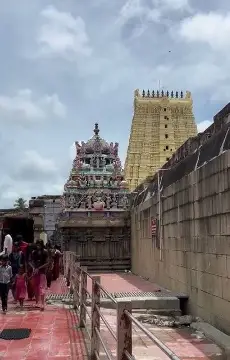
Practical Tips for 22 Wells Bath at Ramanathaswamy:
- Start early morning for fewer crowds and peaceful atmosphere
- Carry small towel and change of clothes in waterproof bag
- Wear simple cotton clothing that dries quickly
- Follow temple priests’ guidance for proper sequence and mantras
- Some wells have gender-specific timing restrictions – check with volunteers
- Allow 2-3 hours for complete ritual without rushing
Ramanathaswamy Temple Pujas and Abhishek Timings
The temple conducts three daily Abhishek ceremonies that maintain an unbroken worship tradition spanning over 800 years, enhanced during the Pandya and Chola periods through royal patronage. These elaborate rituals follow authentic Vedic procedures preserved by hereditary priest families, using specific sacred materials mentioned in ancient texts like the Skanda Purana. Participation in these ceremonies provides direct blessings from the Jyotirlinga’s divine energy while offering spiritual purification, positive karma generation, and the profound experience of community worship that connects devotees to centuries-old traditions.
Special Monthly Rituals at Ramanathaswamy Temple:
Mahanyasa Purnahuti: The most powerful monthly ceremony involving elaborate fire sacrifices and multiple priests, believed to grant exceptional spiritual benefits to participants.
Rudra Abhishek: Complex Shiva worship conducted by 11 priests simultaneously, creating intense spiritual vibrations through synchronized chanting of Rudra mantras.
Benefits of Participating in Ramanathaswamy Temple Rituals:
Direct exposure to Jyotirlinga energy creates lasting spiritual impressions, while community worship generates collective positive vibrations that amplify individual prayers and intentions.
Ramanathaswamy Temple Architecture – Corridor and Pillar Art
The magnificent Ramanathaswamy Temple represents the pinnacle of Dravidian architecture, featuring the world’s longest temple corridor stretching over 1,200 meters with nearly 1,000 intricately carved pillars. Each pillar tells a story through stone carvings depicting scenes from the Ramayana, various Hindu deities, and intricate floral patterns created by master craftsmen across five centuries.
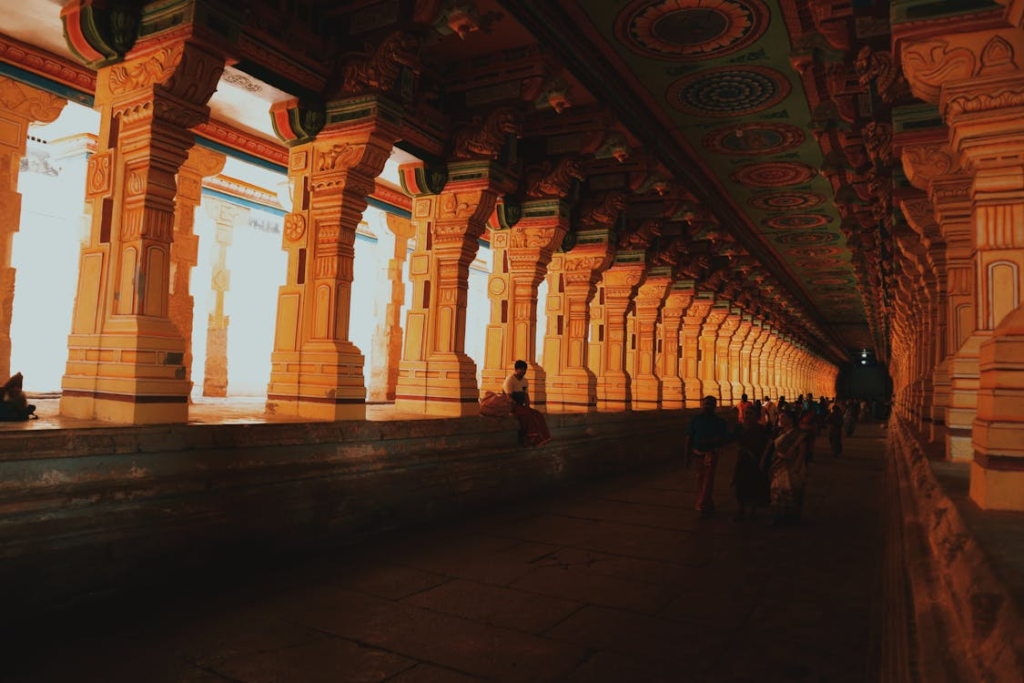
The temple’s acoustic design allows natural ventilation while amplifying chanting and prayers, creating a mystical atmosphere that enhances spiritual experiences. The musical pillars produce distinct notes when struck, demonstrating ancient Indian knowledge of sound and vibration in sacred spaces.
The main sanctum houses the unique sand lingam believed to be shaped by Goddess Sita herself, making it one of the most sacred Jyotirlingas in Hindu tradition. The temple complex showcases remarkable engineering with its massive gopurams reaching 126 feet, sacred water tanks for purification, and precise geometric layout following Vastu Shastra principles. T
he 22 holy wells scattered throughout the premises each carry specific spiritual powers according to ancient scriptures, while the temple’s design facilitates smooth movement of thousands of daily pilgrims. This architectural marvel successfully balances spiritual functionality with aesthetic beauty, creating spaces that inspire devotion while providing practical comfort for worship and meditation.
Places to Visit Near Ramanathaswamy Temple – Dhanushkodi and Pamban Bridge
Dhanushkodi Tour from Rameswaram – Mythological Land’s End (20 km)
Dhanushkodi Significance in Ramayana:
- Ramayana Connection: Where Rama’s army built the famous bridge to Lanka
- Name Origin: “Dhanush” (bow) + “Kodi” (tip) – where Rama broke the bridge
- Sacred Confluence: Meeting point of Bay of Bengal and Indian Ocean
- Pilgrimage Importance: Considered highly sacred for ritual baths
Dhanushkodi Ghost Town History:
- Cyclone Destruction: Destroyed by 1480 cyclone, rebuilt, destroyed again in 1980
- Railway Heritage: Remnants of old railway station and tracks
- Colonial Architecture: Ruins of British-era church and buildings
- Natural Disaster Museum: Living example of nature’s power
Dhanushkodi Travel Experience:
- Journey: Adventurous ride through shallow waters and sand dunes
- Transportation: Local jeeps and buses (₹150-300 per person)
- Photography: Stunning landscape and architectural ruins
- Spiritual Bath: Sacred dip at the confluence point
Pamban Bridge Rameswaram – India’s First Sea Bridge
Pamban Bridge Engineering Marvel:
- Construction Year: 1914 during British colonial period
- Total Length: 2.3 kilometers connecting Rameswaram island to mainland
- Unique Feature: Central lifting section for ship passage
- Engineering Challenge: Built over rough seas and coral reefs
Pamban Bridge Travel Experience:
- Train Journey: Most scenic railway route in South India
- Ocean Views: Panoramic water views on both sides
- Photography: Excellent spots for sunrise and sunset shots
- New Parallel Bridge: Modern road bridge for improved connectivity
Other Places Near Ramanathaswamy Temple
Ariyaman Beach Rameswaram (27 km):
- Clean Environment: Well-maintained beach with basic facilities
- Safe Swimming: Gentle waves and gradual depth increase
- Scenic Views: Beautiful sunrise and sunset photography
- Natural Therapy: Peaceful environment for meditation
Adam’s Bridge (Rama Setu) – Mythological Marvel:
- Ramayana Legend: Bridge built by Hanuman’s army to reach Lanka
- Archaeological Interest: Chain of limestone, sand, and coral
- Satellite Images: NASA images showing bridge-like formation
- Pilgrimage Importance: Devotees believe walking here brings blessings
Kothandaramaswamy Temple – Historical Shrine:
- Dedication: Temple dedicated to Lord Rama, Sita, and Lakshmana
- Historical Significance: Only temple that survived 1480 cyclone
- Architecture: Simple but spiritually powerful structure
- Location: Strategic position overlooking the ocean
Rameswaram Food Guide – Tamil Vegetarian Cuisine
Traditional South Indian Food in Rameswaram
Classic Tamil Feast Experience:
- Banana Leaf Service: Traditional serving method enhancing flavors
- Complete Meal Components:
- Rice Varieties: Steamed rice, coconut rice, lemon rice
- Sambar: Lentil curry with vegetables and tamarind
- Rasam: Thin soup with tomatoes, pepper, and herbs
- Kootu: Mixed vegetable curry with lentils
- Poriyal: Stir-fried vegetables with coconut
- Pickles: Mango, lime, and mixed vegetable varieties
- Payasam: Sweet dessert made with rice, jaggery, and milk
Ramanathaswamy Temple Prasadam:
- Sacred Food: Blessed during temple rituals
- Varieties: Sweet rice, coconut burfi, jaggery sweets
- Distribution: Available after major pujas and ceremonies
- Spiritual Significance: Considered divine blessing in food form
Tamil Coastal Cuisine Specialties:
- Coconut-Based Dishes: Fresh coconut used in most preparations
- Seafood Alternatives: Vegetarian versions of local coastal flavors
- Tamarind Flavor: Prominent sour taste in many dishes
- Curry Leaves: Distinctive aroma in South Indian cooking
Local Snacks and Street Food in Rameswaram
Traditional Rameswaram Snacks:
- Murukku: Spiral-shaped crispy snack made from rice and urad dal flour
- Thattai: Flat, crispy savory crackers with spices
- Banana Chips: Made from local banana varieties, perfect travel snack
- Sundal: Boiled chickpeas or peas with coconut and spices
Fresh Coastal Treats in Rameswaram:
- Tender Coconut Water: Fresh from local coconut trees
- Sugarcane Juice: Freshly extracted, often mixed with lime
- Fresh Fruit Juices: Seasonal fruits like watermelon, musk melon
- Roasted Corn: Street-side preparation with lime and chili powder
Traditional South Indian Beverages:
- Filter Coffee: Strong South Indian coffee with chicory
- Masala Tea: Spiced tea with cardamom, ginger, and cloves
- Buttermilk: Cooling drink made with yogurt and spices
- Panakam: Traditional drink made with jaggery and spices
Ramanathaswamy Temple Trip Cost – Complete Budget Guide
Transportation Costs to Ramanathaswamy Temple
Flight Costs to Rameswaram:
- Chennai to Madurai Flight: ₹3,000-8,000 per person
- Bangalore to Madurai Flight: ₹4,000-10,000 per person
- Mumbai/Delhi to Madurai: ₹6,000-15,000 per person
- Madurai Airport to Rameswaram Taxi: ₹3,500-5,000
- Total Air Travel Cost: ₹6,500-20,000 per person
Train Costs to Rameswaram:
- Chennai to Rameswaram Train:
- Sleeper Class: ₹400-600
- AC 3-Tier: ₹1,200-1,800
- AC 2-Tier: ₹2,000-2,800
- Bangalore to Rameswaram: ₹600-3,500 per person
- Railway Station to Hotel: ₹50-150 (auto-rickshaw)
Bus and Road Travel Costs:
- Private Car from Chennai: ₹8,000-12,000 (fuel + tolls)
- Bus from Chennai: ₹400-800 per person
- Bus from Madurai: ₹150-300 per person
- Local Transportation in Rameswaram: ₹200-500 per day
Rameswaram Hotel Costs and Accommodation Budget
Budget Hotels in Rameswaram (per night):
- Dharmashalas: Free-₹300
- Government Guest Houses: ₹500-800
- Private Lodges: ₹600-1,200
- Budget Total (3 nights): ₹1,500-3,600
Mid-Range Hotels in Rameswaram (per night):
- Standard AC Rooms: ₹1,500-2,500
- Deluxe Rooms: ₹2,500-3,500
- Mid-range Total (3 nights): ₹4,500-10,500
Luxury Hotels in Rameswaram (per night):
- Premium Rooms: ₹4,000-6,000
- Ocean View Suites: ₹6,000-10,000
- Luxury Total (3 nights): ₹12,000-30,000
Ramanathaswamy Temple Darshan and Puja Costs
Basic Temple Visits:
- General Darshan: Free of cost
- Shoe Storage: ₹10-20
- Offerings: ₹50-200 (as per devotion)
- Prasadam Purchase: ₹30-100
Special Services at Ramanathaswamy Temple:
- VIP Darshan: ₹100-200 per person
- Special Abhishek: ₹500-2,000
- 22 Wells Ritual: ₹200-500 (priest fees and offerings)
- Group Pujas: ₹1,000-5,000
Rameswaram Food Prices – Dining Budget Guide
Planning your food budget for Rameswaram helps ensure a comfortable pilgrimage experience without overspending. The temple town offers diverse dining options from budget-friendly local eateries serving authentic Tamil meals to mid-range hotel restaurants with varied menus.
Understanding meal costs, from street snacks to traditional thali meals, allows pilgrims to allocate appropriate funds for their spiritual journey while enjoying the authentic flavors of South Indian coastal cuisine. Below is a simple gist of meal budget in the area near the temple and restaurants in the city
- Local Meals: ₹80-150 per meal
- Street Snacks: ₹20-50 per item
- Temple Prasadam: ₹10-30
- Daily Food Budget: ₹300-500 per person
Mid-Range Dining:
- Hotel Restaurant Meals: ₹200-400 per meal
- Special Thali: ₹150-300
- Beverages: ₹30-80 each
- Daily Food Budget: ₹600-1,200 per person
Sample Ramanathaswamy Temple Trip Budget (3 Days for 2 People)
Economy Package (₹12,000-15,000):
- Transportation: ₹3,000-5,000
- Accommodation: ₹3,000
- Food: ₹2,000
- Temple Activities: ₹1,000
- Sightseeing: ₹1,500
- Miscellaneous: ₹1,500-2,500
Comfort Package (₹25,000-35,000):
- Transportation: ₹8,000-12,000
- Accommodation: ₹9,000
- Food: ₹4,000
- Temple Activities: ₹2,000
- Sightseeing: ₹2,000
- Miscellaneous: ₹3,000-4,000
Luxury Package (₹50,000-70,000):
- Transportation: ₹15,000-25,000
- Accommodation: ₹24,000
- Food: ₹8,000
- Temple Activities: ₹5,000
- Sightseeing: ₹4,000
- Miscellaneous: ₹5,000-8,000
Ramanathaswamy Temple Safety Tips and Travel Guidelines
- Keep important documents in waterproof pouches due to high coastal humidity
- Be cautious during 22 wells ritual as floors can become slippery when wet
- Avoid isolated beach areas during early morning or late evening hours
- Stay hydrated and carry basic medications for heat-related issues
- Keep emergency contacts handy including local police and hospital numbers
- Inform family members about your Ramanathaswamy Temple travel plans
Eco-Friendly Ramanathaswamy Temple Visit – Green Travel Tips
- Use public transportation or shared vehicles to reduce carbon footprint
- Carry reusable water bottles instead of buying plastic bottles
- Choose eco-friendly accommodations in Rameswaram with sustainable practices
- Avoid single-use plastic items like bags, plates, and utensils
- Don’t litter, especially at beaches and Ramanathaswamy Temple premises
- Participate in cleanliness drives when opportunities arise during your visit
Ramanathaswamy Temple Visit Packing Suggestions
Clothing for Temple Visit:
- Traditional Indian attire for Ramanathaswamy Temple visits
- Comfortable cotton clothes for coastal climate
- Light sweater for air-conditioned rooms
- Extra clothes for 22 wells bathing ritual
Essential Items for Rameswaram Trip:
- Comfortable walking shoes and waterproof slippers
- Sun protection: hat, umbrella, sunscreen
- Basic first-aid kit and personal hygiene products
- Quick-dry towel for temple rituals
Spiritual Items:
- Prayer books and meditation beads
- Small idols or pictures for personal worship
- Offering materials like flowers and coconuts
Practical Items for Temple Visit:
- Power bank and universal adapter
- Waterproof pouch for important documents
- Reusable water bottle
- Camera with protective covers for humidity
3-Day Ramanathaswamy Temple Itinerary
A well-planned 3-day itinerary ensures you experience all the spiritual and cultural highlights of Ramanathaswamy Temple without feeling rushed. This suggested schedule balances temple rituals, darshan timings, and nearby sightseeing to create a meaningful pilgrimage experience. Here is 3 day itenary for you.
Day 1 – Ramanathaswamy Temple Arrival:
- Arrive in Rameswaram and check into accommodation
- General darshan at Ramanathaswamy Temple and explore corridors
- Attend evening aarti ceremony
- Rest and prepare for next day’s rituals
Day 2 – Temple Rituals and Local Temples:
- Early morning 22 holy wells bathing ritual
- Participate in special abhishek or pujas at Ramanathaswamy Temple
- Visit temple museum and nearby smaller temples
- Explore local markets for religious items and souvenirs
Day 3 – Sightseeing and Departure:
- Early morning visit to Dhanushkodi
- Experience scenic Pamban Bridge crossing
- Relax at Ariyaman Beach
- Final darshan at Ramanathaswamy Temple for thanksgiving prayers
- Departure from Rameswaram
Conclusion – Plan Your Ramanathaswamy Temple Pilgrimage
Planning a smooth pilgrimage to Ramanathaswamy Temple involves balancing spiritual aspirations with practical preparations. This sacred Jyotirlinga journey offers opportunities for deep spiritual connection, cultural learning, and personal transformation that extend far beyond the physical visit to Rameswaram.
Remember that a Ramanathaswamy Temple pilgrimage is as much about the inner journey as the external experience. Approach your trip with an open heart, respect for local customs, and patience for unexpected situations. The spiritual experiences and memories from this sacred Jyotirlinga often last a lifetime, inspiring positive changes in daily life and strengthening your connection with divine consciousness.
May your Ramanathaswamy Temple pilgrimage bring you the spiritual fulfillment, inner peace, and divine blessings you seek. Start planning your transformative journey to this sacred Jyotirlinga destination today and experience the profound spiritual energy of Lord Ramanathaswamy.